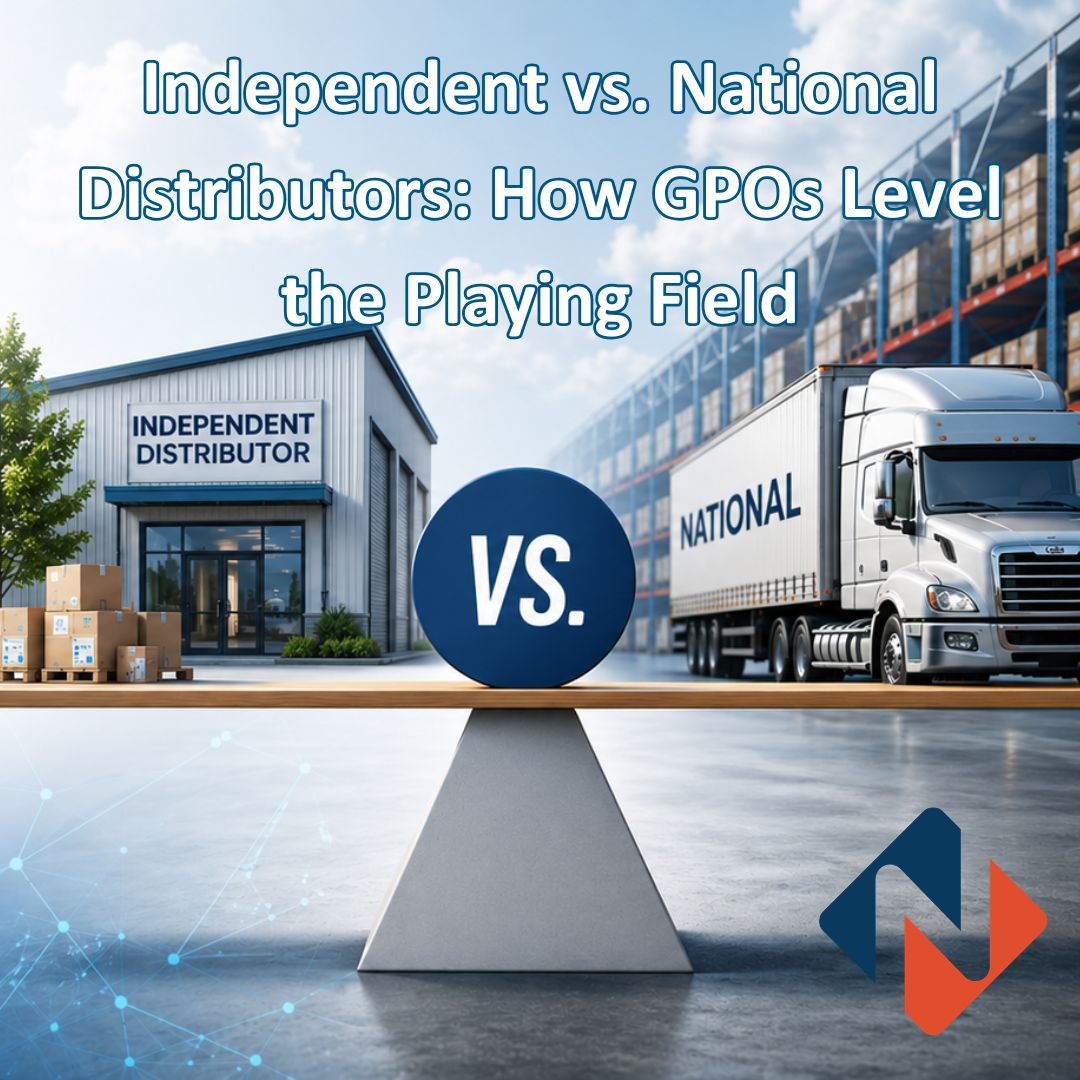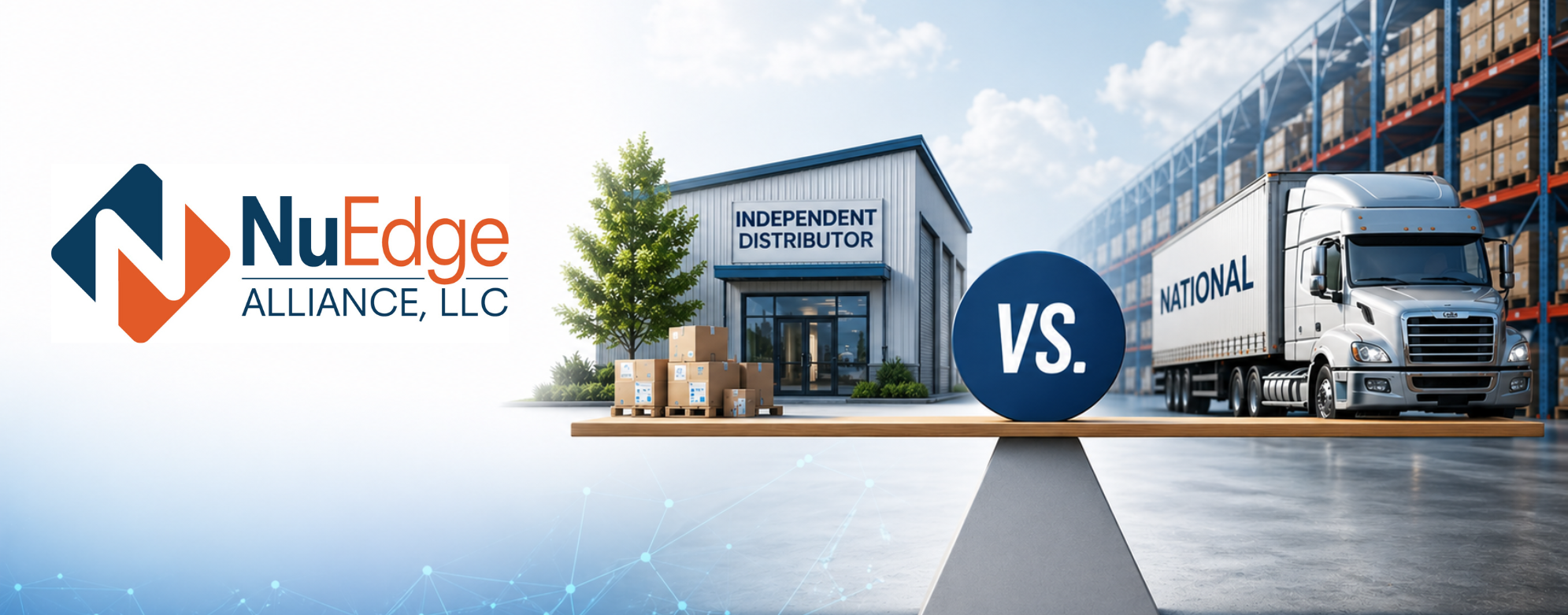
In healthcare distribution, size has traditionally dictated advantage.
National distributors benefit from:
Independent distributors, on the other hand, often face the challenge of competing against these built-in advantages while still trying to deliver strong service, healthy margins, and sustainable growth.
But size is no longer the deciding factor it once was.
Through strategic alignment with a Group Purchasing Organization (GPO), like NuEdge Alliance, independent distributors can gain access to the pricing, contracts, and market opportunities needed to compete more effectively with national players.
Here’s how GPOs help level the playing field — and why that matters for distributors and providers alike.
Large national distributors have historically dominated because of their scale.
Their advantages include:
National distributors can negotiate lower pricing from manufacturers due to their enormous purchasing volumes.
They often maintain broad portfolios of contracts, giving customers access to extensive product options.
Their warehouse networks and logistics systems create efficiencies that smaller organizations struggle to match.
For independent distributors, competing against this scale can seem nearly impossible.
Despite the scale disadvantage, independent distributors often bring strengths that national organizations struggle to replicate.
Independent distributors typically offer:
They often understand:
Without the bureaucracy of a national organization, independents can often adapt faster and solve problems more quickly.
These strengths create value—but without pricing parity, they are often not enough to win or retain accounts.
That’s where GPOs change the equation.
A GPO gives independent distributors access to many of the same strategic advantages that national distributors enjoy.
The biggest challenge for independents is often pricing.
Without scale, they may struggle to secure competitive manufacturer pricing.
A GPO solves this by aggregating purchasing volume across:
This aggregated volume allows the GPO to negotiate favorable pricing on behalf of its members.
The result: independent distributors gain access to competitive contract pricing that helps them compete with larger organizations.
National distributors often use contract breadth as a competitive differentiator.
GPO participation gives independents access to:
This broadens their ability to meet customer needs while maintaining competitive economics.
The result: independents can offer customers a stronger contract portfolio without needing national-scale volume.
Competing against national distributors often pressures independents to discount heavily.
Without contract support, this erodes profitability.
GPO agreements help protect margin by:
The result: independents can remain price competitive without sacrificing profitability.
Providers often assume national distributors offer better pricing simply because they are larger.
When independent distributors align with GPO contracts, they can enter sales conversations with:
This changes the conversation from “Can you match price?” to “How can we deliver better service?”
The result: independents can leverage their service strengths while removing pricing as a barrier.
Manufacturers value:
GPO participation helps independent distributors strengthen manufacturer relationships through:
The result: better manufacturer support and stronger long-term partnerships.
This is where GPOs create the biggest advantage.
National distributors often win on scale.
Independent distributors often win on service.
With GPO support, independents can offer:
plus
That combination is extremely compelling to healthcare providers.
Customers no longer have to choose between:
They can have both.
National distributors will always have scale.
But scale alone does not determine success.
Through GPO partnerships, independent distributors can access:
That allows them to compete where it matters most—while continuing to deliver the personalized service that sets them apart.
In today’s market, GPOs make it possible for independent distributors to offer the best of both worlds:
The pricing power of a national distributor with the agility and service of an independent partner.
And for healthcare providers, that creates a stronger, more competitive supply chain ecosystem for everyone.